The Long-Haul Flight Outfit: 14 Hours, Still Human
Quick Answer: The best long-haul flight outfit is layered, elastic-waisted and breathable: a merino or cotton base, a mid-layer, a large scarf that doubles as a blanket, knit trousers or joggers, compression socks, and slip-on shoes half a size roomy. Compression socks are non-optional on flights over 8 hours.
Fourteen hours in a pressurized tube tests every outfit decision you’ve ever made.
The long-haul uniform is real engineering. Cabin temperature swings, feet that swell, sleep you’re attempting at a 40-degree recline, and the very reasonable desire to land looking like a person rather than a crumpled receipt.
Here’s the system.

Why Are Layers Non-Negotiable on Long Flights?
Cabin temperature is typically held somewhere around 22–24°C (72–75°F) — but it swings through the flight, and it feels wildly different depending on where you’re sitting, whether the galley door is open, and how close you are to a vent.
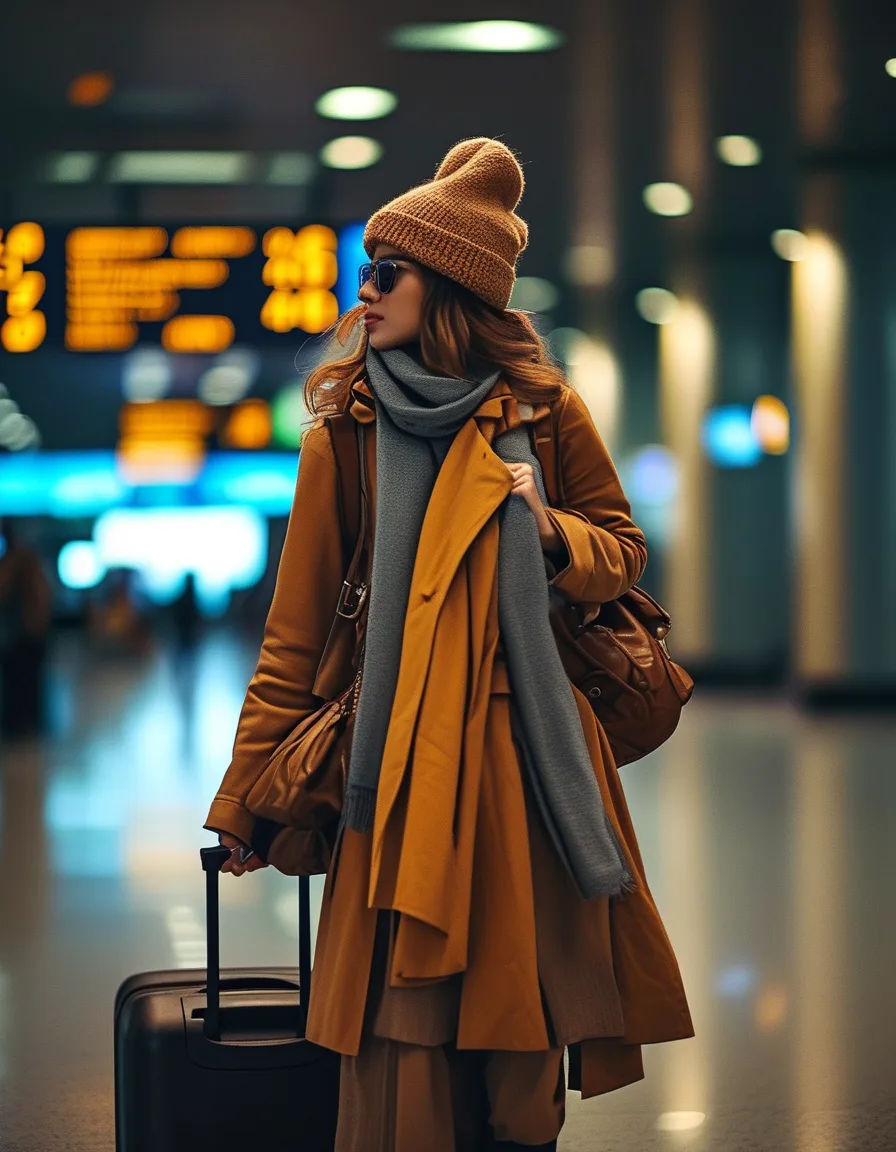
So: a breathable base, a cozy mid-layer, and a big scarf or wrap that doubles as a blanket. Add and shed as the cabin cycles.
The wrap is the MVP, every time. Airline blankets are thin, sometimes absent, and always the same temperature as the room. A large merino or cashmere-blend wrap covers you, rolls into a lumbar pillow, and works as a shoulder cover in the destination’s cathedrals.
The Waistband Rule
Elastic or drawstring only.
Your body changes shape at altitude. Reduced cabin pressure lets gas in your digestive system expand — the reason a snug waistband at the gate becomes a medieval device by hour six.
Tailored joggers, knit trousers, or a soft wide-leg keep both dignity and circulation. Rigid denim is the single most common long-haul regret, followed closely by anything with a structured waistband and a zip.
Comfort can still look considered. A knit trouser in a solid neutral with a clean sneaker reads far better on arrival than leggings and a hoodie, and feels identical.

What Should You Wear on Your Feet?
Feet swell. It’s not a rumor — sitting still for hours lets fluid pool in the lower legs, and most people’s feet are measurably bigger on landing than on boarding.
- Slip-on shoes with room. Half a size up, or a style that stretches. You will want them off, and then back on, and the second part is where tight shoes betray you.
- Compression socks. Genuinely, not optionally, on flights over 8 hours. They support circulation and reduce swelling, and the graduated 15–20 mmHg kind is the standard travel grade.
- Thick socks for cabin walking. Never barefoot to the lavatory. Trust us on this one.
Get up and walk for a few minutes every two to three hours, and do ankle circles in your seat. Your ankles will thank you at customs.
Which Fabrics Survive 14 Hours?
Natural, breathable, odor-resistant. Merino tees, cotton knits, modal layers.
Synthetics after twelve hours are a sensory event, and not a good one — polyester traps odor in a way merino simply doesn’t. If you’re connecting straight into a meeting or a family reunion, this matters more than anything else on the list.
Darker or mid-tone colors hide the journey’s evidence: the tomato juice, the seat-back grime, the mystery smudge acquired at the second airport.
The Landing Reset Kit
In your seat bag, not the overhead: facial mist, moisturizer, lip balm, toothbrush and travel paste, deodorant, a fresh hair tie, and one clean top for the final hour.
Cabin humidity runs around 10–20% — drier than most deserts. Your skin has been quietly dehydrating for half a day, which is most of why people look rough on arrival.
Five minutes before descent: bathroom, teeth, face, fresh top. Transformed. Landing human is a choice, and it costs almost nothing in luggage space.
What Nobody Tells You About Long-Haul Dressing
Your feet get cold before the rest of you. Circulation slows when you’re still. Compression socks help; so does an extra pair to change into halfway, which also does wonders psychologically.
Contact lenses are a mistake on 12+ hours. The dry cabin air makes them miserable by hour four. Glasses, and pack the lenses for landing.
The seatbelt goes over the wrap, not under. Sounds trivial until a turbulence announcement means being woken up to prove you’re buckled.
Dress one layer warmer than you think. Nearly everyone underestimates the cabin, and it’s far easier to shed a layer than to conjure one at 38,000 feet.
Skip the jewelry. Rings on a swelling hand is a specific and avoidable problem, and everything else is just extra work at security.
Mini FAQ
Are leggings okay for a long-haul flight?
Yes, with two caveats: choose a thick, opaque, non-clingy pair rather than a thin gym pair, and add a longer top or tunic if you want to look put-together at the other end. Comfort-wise they’re excellent; the elastic waistband is doing exactly the right thing.
Should I change clothes mid-flight?
A full change is unnecessary and awkward in an airplane lavatory. Changing your top and socks in the last hour gives you most of the benefit for a fraction of the hassle.
Do compression socks really make a difference?
For most people on flights over 8 hours, yes — noticeably less ankle swelling and less leg heaviness on landing. If you have circulation conditions, diabetes, a history of blood clots, or you’re pregnant, talk to your doctor before flying long-haul about compression grade and any other precautions.
TL;DR:
- Layer: breathable base, mid-layer, large wrap that doubles as a blanket.
- Elastic or drawstring waistband only — your shape changes at altitude.
- Slip-on shoes half a size up, plus compression socks on flights over 8 hours.
- Merino and natural fibers over synthetics; darker colors hide the journey.
- Keep a reset kit in your seat bag and change your top in the final hour.
Long-haul style is a survival system with good taste: layered breathables, forgiving waistbands, compression socks and a landing reset kit. Board smart, and step off hour fourteen looking suspiciously refreshed — like someone who knows the game.
Keep Reading
This article is for general styling and informational purposes only. Trends, sizing, availability and pricing may vary by brand and season.